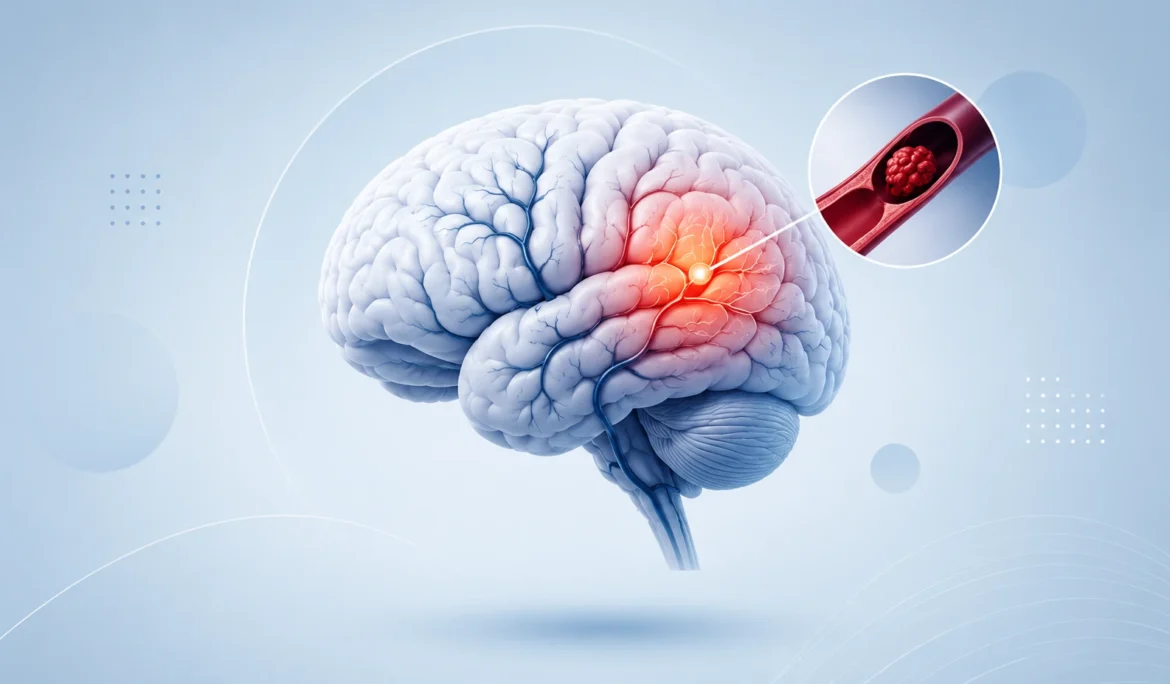
Stroke causes nearly 15 million new cases and around 5 million deaths globally each year, according to the World Health Organization. A significant number of these cases involve brain clot formation, which may lead to either blockage of blood flow or bleeding inside the brain. Both conditions are medical emergencies that require immediate attention.
A brain clot becomes dangerous because the brain depends on constant oxygen supply. When blood flow is interrupted or bleeding increases pressure inside the skull, brain cells begin to die within minutes. In severe cases, neurosurgery in Delhi is required to remove the clot or reduce intracranial pressure.
In Delhi neurosurgery clinics, patients are immediately evaluated through CT or MRI scans to determine whether surgery is needed. However, families often ask whether brain clot surgery is successful. The answer depends on multiple medical factors rather than a fixed percentage.
What Is a Brain Clot and Why It Becomes Dangerous
A brain clot refers to abnormal blood accumulation inside the brain or blockage of blood vessels supplying oxygen. This may occur due to hemorrhagic stroke (bleeding) or ischemic stroke (blockage). Both conditions disrupt oxygen flow and damage brain tissue rapidly.
When pressure builds inside the skull, it can compress vital brain structures. This leads to neurological dysfunction and may become fatal if not treated immediately. In Delhi hospitals, such cases are treated as emergency neuro-critical conditions.
The danger increases because:
- Brain tissue cannot regenerate easily
- Oxygen deprivation causes permanent damage quickly
- Pressure inside skull cannot expand naturally
Symptoms of Brain Clot That Require Emergency Care
Brain clot symptoms usually appear suddenly and worsen within minutes or hours. Recognizing them early is critical for survival and better surgical outcomes.
Patients commonly experience sudden neurological changes that signal brain distress. In Delhi emergency units, these symptoms are treated as stroke alerts until proven otherwise.
Typical symptoms include:
- Sudden severe headache without warning
- Weakness or numbness on one side of body
- Difficulty speaking or understanding speech
- Loss of balance or coordination
Severe warning signs may include confusion, vomiting, seizures, or unconsciousness. These indicate increased brain pressure and require immediate hospital transfer.
When Brain Clot Surgery in Delhi Becomes Necessary
Brain clot surgery is not required in all cases. Doctors decide based on scan results and neurological condition. The main goal is to save brain function and prevent further damage.
Surgery is usually recommended when the clot is large or causing significant pressure on brain tissue. If medical treatment fails or the patient deteriorates, surgical intervention becomes necessary.
Doctors in Delhi neurosurgery centers consider surgery when:
- Brain clot is large or expanding
- Severe brain swelling is seen on scans
- Patient consciousness is declining
In addition, surgery is prioritized if there is risk of brain herniation or life-threatening pressure buildup. Timing is extremely critical in such cases.
Types of Brain Clot Surgery Used in Delhi Hospitals
Different surgical procedures are used depending on the severity and location of the clot. The choice is made after imaging and neurological evaluation. Craniotomy is one of the most common procedures, where part of the skull is opened to remove the clot directly. Burr hole surgery is less invasive and used in certain cases of fluid-like clot accumulation.
Decompressive surgery is performed in severe swelling cases where pressure needs to be relieved immediately. Hematoma evacuation is used to remove collected blood and restore normal brain pressure.
Common procedures include:
- Craniotomy for large clot removal
- Burr hole drainage for subdural collections
- Decompressive surgery for severe swelling
Each procedure is aimed at reducing pressure and protecting brain tissue from irreversible damage.
Brain Clot Surgery Success Rate Explained
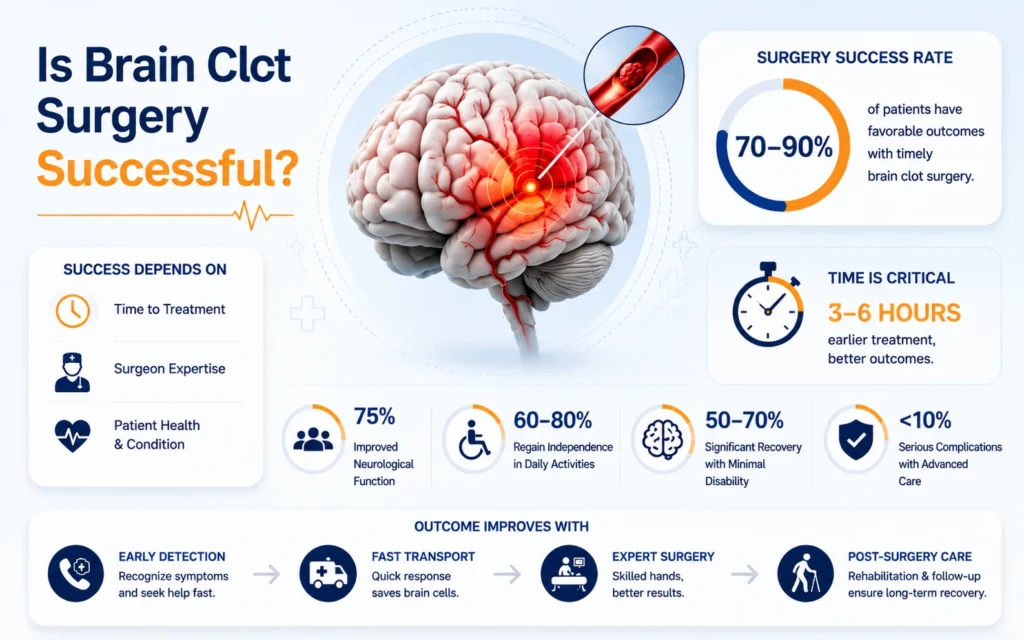
There is no single fixed success rate for brain clot surgery because outcomes vary depending on multiple clinical factors. In medical practice, success is measured by survival, neurological recovery, and long-term function.
Early treatment plays the most important role in determining outcome. Patients treated within the first few hours of symptom onset generally have better recovery chances compared to delayed cases.
Success is influenced by:
- Time taken to reach hospital
- Size and location of brain clot
- Age and overall health condition
Brain clot surgery is often life-saving rather than fully curative. Many patients survive but may require long-term rehabilitation depending on brain damage severity.
Recovery After Brain Clot Surgery
Recovery after brain clot surgery is a gradual and multi-stage process. It begins in the ICU and continues for weeks or months depending on brain injury level.
Initially, patients are closely monitored for brain swelling, bleeding, or neurological instability. Once stable, they are moved to general wards for further observation and early mobility support.
Recovery stages include:
- ICU monitoring during first critical days
- Hospital recovery with neurological observation
- Rehabilitation for physical and speech recovery
Brain Clot Treatment Without Surgery
Not all brain clot cases require surgery. In mild or stable cases, doctors manage the condition with medications and close monitoring.
Non-surgical treatment focuses on controlling blood pressure, reducing brain swelling, and preventing complications. ICU observation is often required even in non-surgical cases.
Medical management includes:
- Blood pressure stabilization
- Anti-swelling medication
- Continuous neurological monitoring
This approach is mainly used when the clot is small or not causing severe pressure on the brain.
Brain Clot Surgery Success
Brain clot surgery success cannot be defined by a fixed percentage because every case is different. Instead, success is determined by how quickly treatment is given and how much brain damage has already occurred.
In general, early-treated cases have significantly better outcomes compared to delayed treatment. However, even successful surgery may not guarantee full recovery due to brain sensitivity.
Success depends on:
- Early hospital arrival
- Minimal brain damage before surgery
- Effective post-operative care
Thus, brain clot surgery is best understood as a life-saving intervention rather than a guaranteed cure.
Brain clot surgery is a critical emergency procedure that saves lives in many cases, especially when performed quickly. However, its success depends on multiple clinical factors rather than a single fixed rate.
In Delhi neurosurgery hospitals, outcomes improve significantly when patients reach early and receive immediate imaging and surgical care. Timely intervention remains the most important factor in survival and recovery.
While many patients recover partially or fully, others may require long-term rehabilitation depending on brain injury severity. Therefore, brain clot surgery should always be viewed as a time-sensitive, life-saving treatment where early action determines outcome.
If you or your loved one is experiencing symptoms such as sudden weakness, severe headache, speech difficulty, or loss of consciousness, immediate neurological evaluation is critical.Center for Brain and Spine, Delhi provides specialized care for emergency brain and spine conditions, including brain clot and stroke management. The center focuses on rapid diagnosis, advanced neuroimaging, and timely surgical intervention under expert neurosurgical supervision