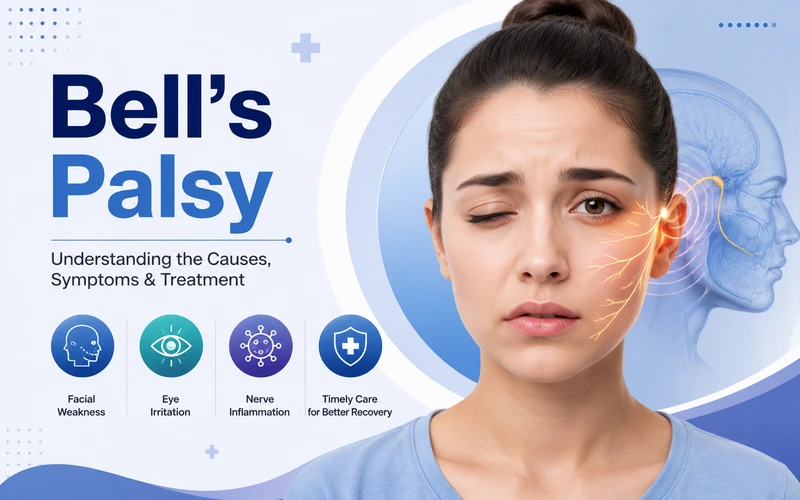
Approximately 70–85% of people with Bell’s Palsy recover completely, especially when treatment begins within the first 72 hours of symptom onset. Bell’s Palsy is a temporary neurological condition that causes sudden weakness or paralysis of the muscles on one side of the face. Although the symptoms can appear alarming and may resemble a stroke, Bell’s Palsy is usually caused by inflammation of the facial nerve rather than a blockage of blood flow to the brain.
Bell’s Palsy can make it difficult to smile, close one eye, raise the eyebrow, or control facial expressions on the affected side. The condition is believed to be associated with viral infections that trigger swelling of the facial nerve. It can affect people of any age, including pregnant women, and requires prompt medical evaluation to improve recovery.
If you notice sudden facial drooping, difficulty closing one eye, or weakness on one side of the face, consult an experienced Neurosurgeon in Delhi without delay. Timely treatment in Delhi is important.
What Is Bell’s Palsy?
Bell’s Palsy is a neurological condition that causes sudden weakness or paralysis of the muscles on one side of the face due to inflammation of the seventh cranial nerve (facial nerve). This nerve controls facial expressions, blinking, tear production, and part of the sense of taste. When it becomes swollen or compressed, nerve signals cannot reach the facial muscles properly, resulting in temporary facial weakness.
Bell’s Palsy vs. Stroke
One of the biggest concerns for patients is distinguishing Bell’s Palsy from a stroke. In Bell’s Palsy, weakness usually affects the entire side of the face, including the forehead, making it difficult to raise the eyebrow or close the affected eye. A stroke, however, is often accompanied by additional symptoms such as weakness in the arm or leg, difficulty speaking, confusion, loss of balance, or vision changes and requires emergency medical treatment.
Symptoms of Bell’s Palsy
Bell’s Palsy symptoms usually reach their maximum severity within 48–72 hours, making early recognition essential for timely treatment. The condition typically affects only one side of the face and can vary from mild muscle weakness to complete facial paralysis.
Common Symptoms of Bell’s Palsy
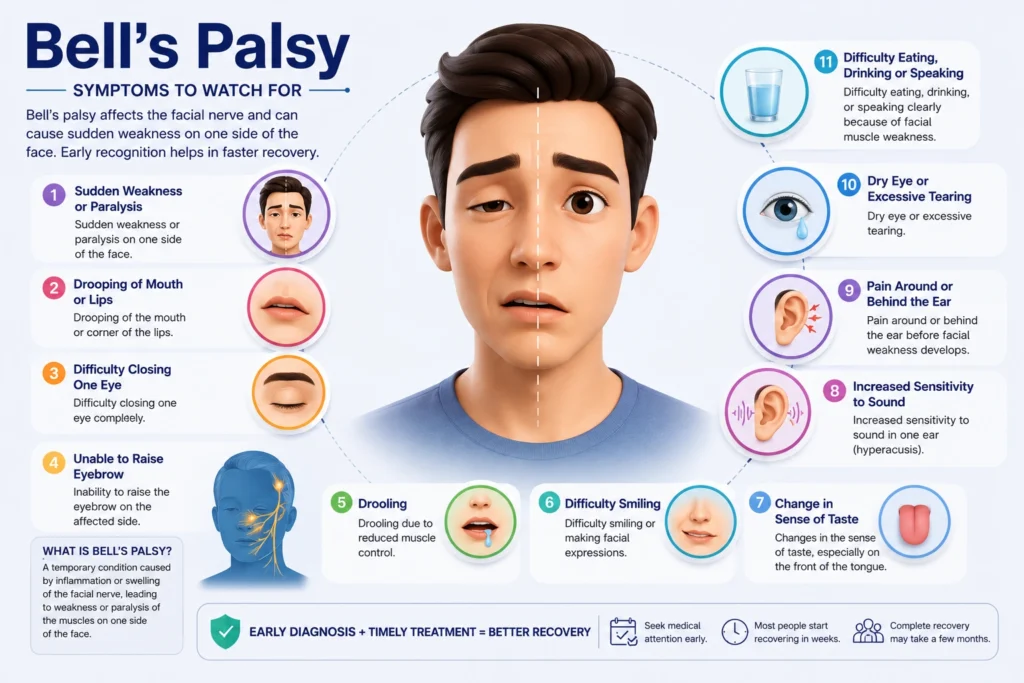
You may experience one or more of the following symptoms:
- Sudden weakness or paralysis on one side of the face
- Drooping of the mouth or corner of the lips
- Difficulty closing one eye completely
- Inability to raise the eyebrow on the affected side
- Drooling due to reduced muscle control
- Difficulty smiling or making facial expressions
- Changes in the sense of taste, especially on the front of the tongue
- Increased sensitivity to sound in one ear (hyperacusis)
- Pain around or behind the ear before facial weakness develops
- Dry eye or excessive tearing
- Difficulty eating, drinking, or speaking clearly because of facial muscle weakness
Common Causes of Bell’s Palsy
Several viral infections have been linked to Bell’s Palsy, including:
- Herpes simplex virus (HSV-1)
- Varicella-zoster virus (chickenpox and shingles)
- Epstein-Barr virus
- Cytomegalovirus (CMV)
- Influenza virus
- Adenovirus
- Respiratory infections
These infections can cause inflammation around the facial nerve, leading to the sudden onset of symptoms.
Bell’s Palsy Treatment in Delhi
Early medical evaluation helps reduce inflammation of the facial nerve, protects the affected eye, and lowers the risk of long-term facial weakness. The treatment plan depends on the severity of symptoms, the underlying cause, and the patient’s overall health.
Medications for Bell’s Palsy
Doctors commonly prescribe medications to reduce facial nerve inflammation and improve recovery.
Corticosteroids
Corticosteroids, such as prednisolone, are the first-line treatment for Bell’s Palsy. When started within 72 hours, they significantly increase the likelihood of complete facial nerve recovery by reducing swelling around the facial nerve.
Antiviral Medicine
Antiviral medicines may be recommended when Bell’s Palsy is suspected to be associated with viral infections, particularly herpes simplex virus or varicella-zoster virus. These medications are sometimes prescribed alongside corticosteroids in selected patients.
Eye Care Is an Essential Part of Treatment
Many patients with Bell’s Palsy cannot close the affected eye completely, increasing the risk of dryness, irritation, and corneal injury. Eye protection is therefore an important part of treatment and may include:
- Lubricating eye drops during the day
- Protective eye ointment at night
- Wearing protective glasses outdoors
- Gently taping the eyelid closed while sleeping, if advised by your doctor
Facial Physiotherapy and Rehabilitation
Facial rehabilitation helps maintain muscle function while the facial nerve heals. Depending on the severity of the condition, your doctor or physiotherapist may recommend:
- Facial muscle exercises
- Mirror-assisted facial movements
- Gentle facial massage
- Neuromuscular retraining
- Electrical stimulation only when clinically indicated
These therapies should always be performed under professional guidance to avoid abnormal muscle movements during recovery.
When Is Neuro Surgery in Delhi Required?
Most patients with Bell’s Palsy recover without surgery. Surgical treatment is rarely needed because the condition usually improves with medications and rehabilitation. If facial weakness persists or another neurological condition is suspected, a Neurosurgery Specialist in Delhi may recommend additional investigations, such as MRI or nerve conduction studies, to determine the underlying cause and discuss further treatment options.
Most people with Bell’s Palsy recover completely when diagnosis and treatment begin early. Recognizing the symptoms promptly and consulting a neurological specialist within the first 72 hours can significantly improve recovery and reduce the risk of long-term facial weakness. Since sudden facial paralysis may also indicate serious conditions such as a stroke, timely medical evaluation is essential to ensure an accurate diagnosis and appropriate treatment.
If you or a loved one experiences sudden facial drooping, difficulty closing one eye, or weakness on one side of the face, don’t delay seeking medical attention. At Center for Brain and Spine, our experienced Neurosurgeons in Delhi provide comprehensive evaluation, advanced neurological diagnosis, and evidence-based Bell’s Palsy treatment in Delhi tailored to each patient’s condition.
From early diagnosis and medical management to facial rehabilitation and long-term follow-up, our multidisciplinary team is committed to helping patients achieve the best possible recovery. Schedule a consultation with the specialists at Center for Brain and Spine to receive timely care and expert guidance for Bell’s Palsy and other neurological disorders.